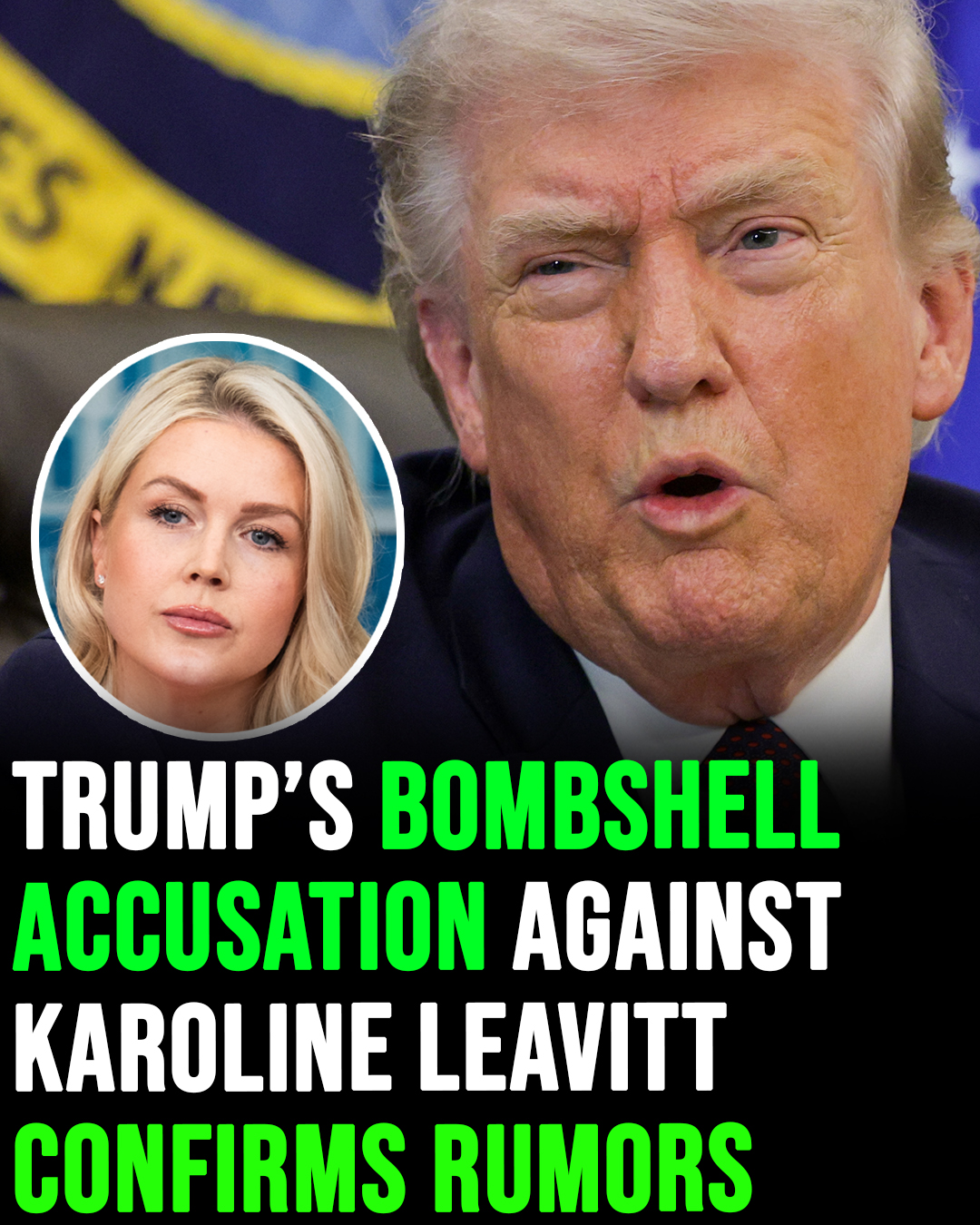
The atmosphere inside the Oval Office was already charged with its usual high-stakes energy, a familiar backdrop for the rapid-fire political theater that defining the modern era. Journalists shuffled their feet, adjusting recording equipment and shifting their weight as microphones hovered to capture every syllable. Donald Trump stood at the center of the room, commanding the space with his characteristic bravado, launching into a fierce, well-rehearsed tirade against what he continuously labeled as a completely rigged and deeply biased mainstream media landscape. The rhetoric was familiar to everyone present, a standard fixture of the daily political news cycle that the press corps had grown entirely accustomed to documenting. But in a single, unscripted moment, the entire trajectory of the press briefing fractured, shifting instantly from a routine policy grievance into a stunning display of raw, personal confrontation that no one in the room could have anticipated.
Without warning, the focus pivoted sharply away from the external broadcasting networks and locked directly onto the internal staff operating within the White House itself. Trump spun around toward his own press secretary, Karoline Leavitt, who was standing just a few feet away, fully prepared to execute her daily responsibilities of defending the administration from a relentless onslaught of media criticism. In front of a room packed with rolling television cameras and stunned reporters, he openly designated her performance as terrible. The words cut through the ambient noise of the room like a physical blow, instantly silencing the typical chatter and cross-talk of the press pool. Reporters froze mid-sentence, glances darting frantically between the president and the young press secretary, entirely unsure whether they had just witnessed an unconventional, highly aggressive joke or a definitive, public execution of her professional standing and career within the administration.
In that fleeting, high-tension exchange, a routine and predictable complaint regarding modern media bias was effortlessly transformed into an intense moment of human drama. Leavitt, whose entire professional portfolio centers around projecting absolute unity and fiercely shielding the administration from external attacks, suddenly found herself transformed into the primary target of the president’s public ire. The declaration that she was doing a terrible job echoed clearly across the live broadcast feeds, leaving absolutely no room for misinterpretation. Even as a smirk developed on Trump’s face and he later attempted to soften the blow by casually insisting that she would ultimately remain in her current position, the damage to the professional decorum was already done. The delicate line separating a lighthearted jest from absolute public humiliation blurred completely, forcing Leavitt to maintain her composure under the intense glare of the spotlight, smiling through the palpable sting of a highly visible reprimand from her own boss.
Yet, this striking episode ultimately revealed far more than a simple, passing joke or a momentary lapse in traditional political etiquette. It underscored a fundamental reality of how this leadership style functions, demonstrating an enduring tendency to actively thrive on internal tension, friction, and unpredictability, even when dealing with the closest members of the executive team. Public pressure and interpersonal conflict are consistently utilized not just as spontaneous reactions, but as calculated tools of both political theater and administrative weaponization. The subsequent attacks launched against major television broadcasters’ licenses and the repeated assertions that the mainstream media operates merely as an administrative arm of the political opposition were certainly not novel concepts to the seasoned reporters in the room. However, when those grand structural complaints were paired with a direct, highly personal jab at Leavitt, they painted a vivid, unmistakable portrait of a leader who places far more trust in constant combat and internal friction than in administrative calm and steady cooperation, even when interacting with the individuals standing closest to the center of power.
The aftermath of the briefing sent shockwaves through the broader political community, triggering a massive wave of speculation regarding the internal stability of the communications team. Observers and media analysts quickly began unpacking the underlying dynamics of the exchange, noting that such public displays of dominance serve a dual purpose within the broader media strategy. By keeping even his most loyal defenders on a perpetually shifting foundation, a distinct environment is created where absolute loyalty must be continuously proven, and no single staff member is ever permitted to feel entirely secure in their position. For Leavitt, the reality of navigating such a high-profile role means operating with the constant awareness that the boundary between public praise and sudden administrative exile can evaporate in a single sentence. As the live television feeds cut away to commercial breaks and reporters scrambled to file their breaking news updates, the silent tension lingering within the West Wing served as a stark reminder that in the arena of modern political theater, the ultimate weapon is often directed inward, turning the daily press briefing into a volatile stage where any ally can become an adversary in the blink of an eye.