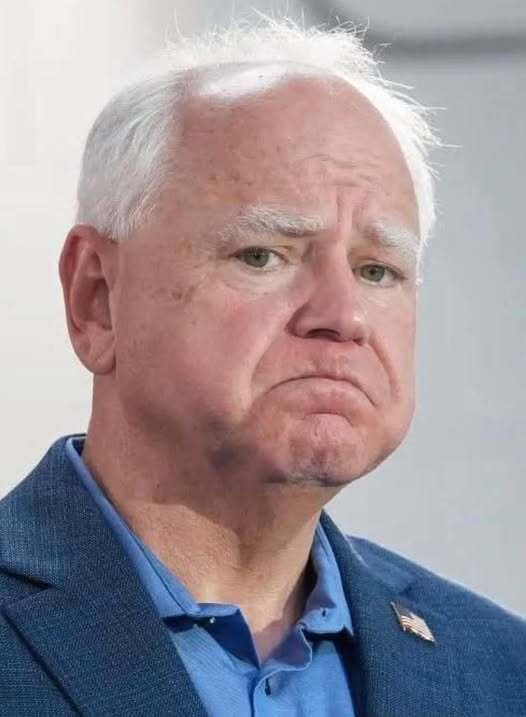
The exact moment the massive national announcement officially flashed across television screens and mobile networks, the entire political landscape fractured. A deafening roar of cheers instantly crashed over the gathered crowd, hundreds of smartphones shot simultaneously into the air to capture the moment, and a traditionally quiet Midwestern state was suddenly propelled directly into the absolute epicenter of American politics. Years of steady governance, exhausting late-night legislative negotiations, and intimate kitchen-table town halls had steadily culminated in this single, breathless revelation. Now, a familiar local governor stood precisely one heartbeat away from the highest office in the country, and the eyes of the entire nation were locked onto his every move. Political allies instantly hailed the monumental decision as a definitive turning point for the future of the republic, while fierce critics wasted no time labeling the choice as an incredibly risky electoral gamble. But for the everyday citizens of Minnesota, the transition felt like history cracking open in real time right before their eyes.
Throughout the neighborhoods of Minnesota, the widespread celebration carried a remarkably deep, almost personal sense of local pride. These were the exact people who had witnessed this leader up close for years, observing him during routine school district visits, crowded union halls, muddy emergency flood zones, and somber veterans’ remembrance events. Now, they watched him step directly out of the familiar territory of local governance and into the brightest, harshest, and most unforgiving spotlights in the entire global political arena. His extensive record of pragmatic compromise, bipartisan navigation, and quiet persistence was suddenly swept up and transformed into a grand national narrative, held up by strategists as definitive proof that calm, methodical leadership still possesses immense value in chaotic and deeply polarized times.
Yet, just beneath the exploding confetti, the roaring applause, and the sensationalized media headlines, a much quieter and far more profound question began to linger in the minds of political analysts. People wondered whether the exact same unassuming steadiness that had successfully reassured a single Midwestern state could actually resonate with a deeply fractured and ideually divided nation. His staunchest supporters firmly believe that his personal life story, which remains deeply rooted in public school classrooms, small rural towns, and working-class families, offers an essential political bridge capable of connecting coastal elites with heavily overlooked heartland voters who feel entirely abandoned by the modern political establishment. Whatever the ultimate electoral outcome may be when the final ballots are counted, Minnesota’s rapid ascent to the absolute center of the political map has already fundamentally reshaped the entire trajectory of the race, effectively turning one governor’s monumental next step into a massive national test of what specific kind of leadership the American people truly desire.
As the campaign machinery quickly roared to life, shifting into an entirely new gear, the national media descended upon the state, eager to dissect every piece of the governor’s past legislative record and personal history. Analysts spent hours on live broadcasts debating the strategic advantages of bringing a Midwestern perspective to a high-stakes national ticket, analyzing voter demographics and regional shifting patterns with microscopic precision. Every policy decision from his past, from education funding to infrastructure spending, was suddenly subjected to intense national scrutiny, viewed through a highly polarized lens that sought to either canonize his pragmatism or vilify his compromises. Yet, back home, the atmosphere remained remarkably grounded. In small-town diners, suburban coffee shops, and urban community centers, the conversation centered not on electoral math or swing-state strategy, but on the surreal reality of seeing a familiar face dominating the global news cycle.
For the people who had worked alongside him, the sudden national spotlight brought a strange mix of validation and anxiety. They recounted stories of his approachable demeanor during local crises, his willingness to sit down with political opponents over coffee, and his apparent lack of the polished, calculated slickness that often characterizes career politicians on the coasts. To his neighbors, he wasn’t just a strategic asset on a presidential ticket; he was a guy who had coached high school football, taught geography, and understood the specific anxieties of families trying to balance a household budget. This deep-seated local familiarity became a powerful counter-narrative to the national attack ads that began flooding the airwaves almost immediately, creating a stark contrast between the person the community knew and the political caricature being constructed by opposition researchers.
As the days progressed, the state capital transformed into a bustling hub of national political activity, with campaign buses lining the streets and security detail establishing tight perimeters around historical government buildings. The sudden influx of national attention brought a vibrant, almost electric energy to the region, forcing locals to adapt to the reality of live television trucks parked outside their favorite lunch spots and high-profile commentators broadcasting from familiar landmarks. Amidst the logistical chaos, the governor continued to project the same unruffled, common-sense persona that had defined his local political career, using his initial national addresses to emphasize unity, hard work, and the enduring strength of community bonds. This deliberate messaging strategy aimed to directly combat the prevailing cynicism of the modern electorate, presenting a vision of public service that felt distinct, accessible, and refreshingly divorced from typical Washington melodrama.
With the entire country now watching, the state’s sudden political prominence became a unique case study in the power of regional identity within national elections. It forced a broader conversation about the shifting dynamics of the American electorate, challenging long-held assumptions about the inevitability of political polarization and the necessity of aggressive, high-conflict campaign strategies. Whether this specific brand of Midwestern pragmatism can successfully unite a deeply divided population remains to be seen, but the journey from a local classroom to the absolute pinnacle of national political power has already secured its place as one of the most compelling and transformative chapters in modern political history, leaving an indelible mark on the state, the nation, and the future of American leadership.