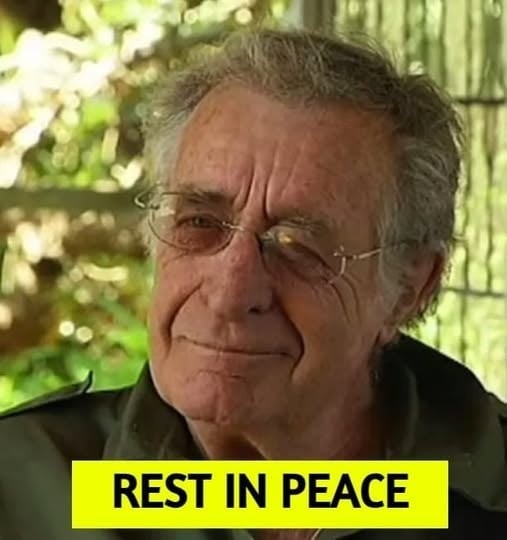
The global cinematic community has been plunged into deep, unyielding mourning following the sudden and deeply ironic passing of an absolute titan of industry, a man who spent the better part of five decades actively mocking the very concept of mortality. He successfully cheated death through thousands of calculated, high-stakes cinematic spectacles, routinely surviving the kinds of catastrophic, metal-mangling scenarios that would instantly claim an ordinary life. Yet, at eighty-five years old, the legendary Mad Max daredevil and cinematic pioneer met his ultimate end not in a blaze of carefully staged Hollywood glory, but in a incredibly lonely, devastatingly ordinary automobile accident on a public roadway. Tributes, tearful memories, and historical retrospectives are currently flooding in from every corner of the international filmmaking world, all honoring a stunt icon who spent his existence bending the literal laws of physics, wrestling deadly apex predators, and willingly setting his own body ablaze purely for the collective entertainment of a global audience.
Grant Page’s final, heartbreaking moments on earth were devastatingly mundane for a man who had transformed the art of defying gravity into a highly celebrated professional career. While navigating a solitary drive through the sprawling, rural expanses of New South Wales, Australia, the eighty-five-year-old stunt maestro suddenly confronted the unyielding, unscripted lethality of real-world vehicular danger, the precise brand of catastrophic impact he had spent his entire adult life meticulously engineering for the safety of rolling cameras. Elite emergency medical services and highway rescue teams rushed to the remote collision site within mere minutes of the initial impact, deploying advanced life-saving apparatuses. However, the legendary performer who had miraculously walked away from countless high-speed, on-screen head-on collisions and explosive vehicle rollovers could not be rescued from the severe trauma of this final, real-world impact. The man who seemed entirely immortal to generations of adoring moviegoers was ultimately unable to outrun the sudden, violent finality of a routine highway accident.
In the painful, hollow days following the official confirmation of his passing, a massive, overwhelming wave of profound grief has rolled directly through Australia’s elite film community and echoed out across the global entertainment landscape. His son, Leroy, released a deeply moving public statement, recalling a fiercely vibrant father who was still buzzing with infectious energy, actively developing complex new cinematic concepts, and remaining exceptionally motivated to push creative boundaries right up until the very second of his final drive. Visionary film directors, revered cinematic critics, and lifelong industry colleagues have stepped forward to describe a entirely fearless professional who possessed an almost supernatural, instinctive genius behind the steering wheel of any high-performance machine. He was widely celebrated as a visionary renegade who willingly slid down crumbling cliff faces while engulfed in roaring flames, leapt with absolute precision between speeding muscle cars on dusty desert highways, and transformed early Australian action cinema into a visceral, hyper-dangerous art form that redefined global filmmaking standards.
Long before modern computer-generated imagery and advanced digital special effects took over the Hollywood studio system, transforming modern action movies into sterile, pixelated environments, heroes like Grant Page relied entirely on raw human courage, impeccable mathematical timing, and an unshakeable tolerance for extreme physical danger. During the golden era of practical effects, when a script demanded a vehicle to launch over a ravine or burst into a spectacular fireball, it required an actual human being to climb into the driver’s seat, grip the steering wheel, and actively pray that their safety rigging would hold against the brutal impact. Page did not merely participate in this high-risk industry; he completely revolutionized it, establishing highly sophisticated mechanical safety protocols and advanced stunt choreography techniques that saved the lives of hundreds of actors and fellow stunt performers over the course of his illustrious, decades-long career.
His groundbreaking work on George Miller’s original, dystopian masterpiece Mad Max permanently altered the cinematic landscape, injecting a raw, terrifying level of vehicular realism into the film that had never been witnessed by global audiences before. The frantic, rubber-burning chases and bone-shattering impacts displayed on screen were entirely real, executed by Page and his tight-knit crew of renegade Australian drivers who possessed an absolute disdain for personal safety. This raw, unfiltered approach to practical filmmaking cemented the franchise’s legendary cult status and established Page as a highly sought-after creative force, attracting the attention of prominent international directors who desperately sought to capture a fraction of his chaotic magic in their own big-budget studio releases. He transformed the role of the stuntman from an anonymous, disposable body into a highly respected, integral creative partner in the storytelling process.
Beyond his legendary work with high-performance automobiles and explosive structural drops, Page’s insatiable thirst for adrenaline pushed him to conquer a vast array of dangerous disciplines, frequently participating in highly public stunts that blurred the line between cinematic entertainment and absolute madness. He famously engaged in carefully choreographed underwater sequences with live, unpredictable sharks, swam through churning, razor-sharp ocean reefs, and executed prolonged full-body burns that required him to remain completely enveloped in roaring chemical fires for minutes at a time while delivering physical performances. His body became a living, breathing canvas of historical scars, each one representing a distinct, hard-fought victory over a scenario that should have logically resulted in a fatality.
Though the physical engine of his extraordinary life has finally been brought to a sudden, tragic halt on a quiet New South Wales highway, Grant Page’s massive cultural legacy continues to roar onward like a beautifully tuned V8 engine that absolutely refuses to die. He is survived by his four devoted sons, a network of deeply loving former partners, and multiple generations of deeply inspired filmmakers, stunt coordinators, and adrenaline junkies who continue to view his historic body of work as the absolute gold standard of action cinema. The profound blueprints he laid down in the dirt and asphalt of early independent cinema will continue to guide, inspire, and challenge action directors for centuries to come. In an industry increasingly dominated by artificiality and digital perfection, the memory of the wild, unyielding Australian daredevil who willingly risked everything for the sheer thrill of the spectacle stands as a powerful, eternal monument to the absolute raw power of human courage.