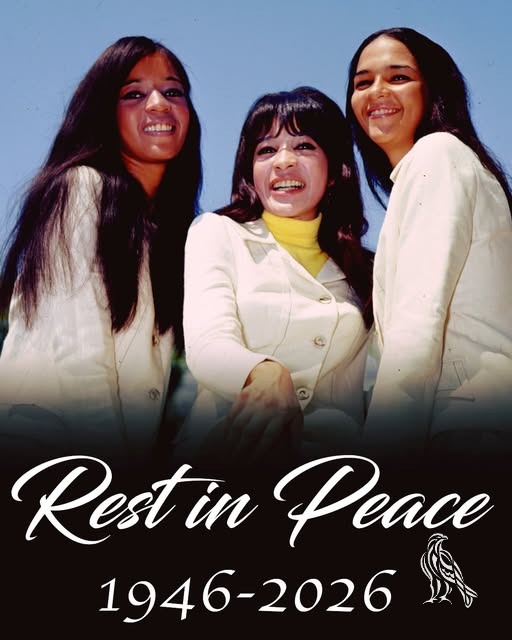
The passing of Nedra Talley Ross at the age of eighty marks the definitive conclusion of a monumental era in American music history, leaving behind a profound legacy that constantly oscillated between towering public recognition and deep, private steadiness. Her daughter recently shared the heartbreaking news that the legendary vocalist passed away peacefully inside her home, entirely surrounded by her loving family members. It was a remarkably tranquil ending that beautifully reflected exactly how she chose to intentionally navigate much of her later life, far removed from the chaotic, blinding flashbulbs of Hollywood stardom. For millions of music enthusiasts across the globe, her departure is not merely the loss of a cultural icon, but the final closing chapter of a distinct sonic movement that permanently reshaped the global entertainment landscape during the middle of the twentieth century.
As an irreplaceable, core vocal pillar of the legendary group The Ronettes, performing alongside her iconic bandmates Ronnie Spector and Estelle Bennett, Nedra fundamentally helped engineer a revolutionary vocal sound that continues to carry immense emotional weight across generations. Timeless, chart-topping masterpieces like Be My Baby, Walking in the Rain, and Baby I Love You did not merely define a singular cultural moment in the nineteen-sixties; they permanently etched themselves into the very fabric of global popular culture. Their historic, high-stakes studio collaborations with producer Phil Spector famously introduced the world to the revolutionary Wall of Sound production technique, a dense, layered architectural marvel of audio engineering that gave those specific vocal recordings a haunting depth and a staggering resonance that continues to influence contemporary record production decades later. Nedra’s precise harmonies served as the essential emotional anchor within that massive wall of audio, providing a unique stability that allowed the group’s signature romantic longing to soar.
The massive, sweeping influence of the group extended far beyond the boundaries of musical composition and studio recordings. Their striking, highly influential public image—characterized by their towering, exaggerated beehive hairstyles, bold eyeliner, matching tailored dresses, and an unmatched, cool composure—became a defining visual blueprint for how an entire revolutionary era of fashion and female empowerment is remembered. They were fiercely independent women dominating a male-centric industry, projecting an undeniable aura of confidence that captivated audiences worldwide. But what frequently remained completely invisible to the adoring public was the immense, suffocating weight operating just behind that flawless performance facade. Global fame brought unprecedented international recognition, but it simultaneously ushered in a relentless barrage of intense industry pressure, corporate manipulation, and personal exhaustion. When the intense internal and external strains ultimately caused The Ronettes to disband, Nedra made the radical, unexpected decision to completely step away from the limelight rather than desperately cling to a toxic industry apparatus that no longer aligned with her evolving personal values and desire for inner peace.
Instead of allowing herself to be consumed by the ghost of her past fame, she deliberately chose to construct an entirely different, infinitely quieter rhythm for her life. Personal family devotion, deep spiritual faith, and grounded everyday work completely outside the entertainment spotlight became her primary focuses. Over the subsequent decades, she beautifully channeled her enduring creative talents into releasing a deeply personal Christian music album, and she later successfully transitioned into a highly productive career within the real estate market. These distinct professional paths were chosen not because they sought public attention or validation, but because they provided an essential, healing sense of personal autonomy and structural steadiness. It was absolutely not a frantic retreat born out of defeat; it was a powerful, highly calculated decision made by a woman who fully understood that her human worth was not dictated by the number of gold records hanging on a studio wall.
When The Ronettes were formally inducted into the prestigious Rock and Roll Hall of Fame in two thousand seven, the historic ceremony marked a profound, beautiful sense of cultural completion for her journey. The grand industry acknowledgment did not occur because it changed anything about the spectacular work that had already been accomplished decades prior, but rather because it officially forced the music establishment to look back and accurately document the massive debt it owed to these trailblazing women. For Nedra, the true, lasting meaning of that high-profile induction was less about acquiring another trophy or an empty industry title, and far more about the beautiful, nostalgic remembrance of the magnificent artistic monument they had meticulously built together as a sisterhood during their youth.
With her deeply mourned passing, a somber and historic milestone has been reached: all of the original, founding members of The Ronettes are now officially gone from this earth. Yet, their timeless artistic contributions have absolutely not followed them into the silence. Their breathtaking vocal work continues to thrive dynamically in pristine studio recordings, in pervasive cultural influence, and in the effortless way their most iconic tracks still seamlessly find their way into the lives of young music lovers every single day. Some human lives move between intense global visibility and profound personal quietude in ways that are not always fully appreciated by contemporary society in the immediate moment. Nedra Talley Ross masterfully carried the weight of both realities with unmatched grace. She was an undeniable part of a cultural phenomenon that defined an entire generation of human beings, and then she possessed the immense strength to live the remainder of her days without ever needing to define her identity by anyone else’s standards. That rare, spectacular balance, in and of itself, says more than enough about her incredible character.